
Start With What the Customer Is Doing
When a pipe bursts, a homeowner needs a local plumber fast. A search ad can put your service in front of them as they look for help.
That same plumbing company could use a social ad to show a bathroom remodel, catching the eye of a homeowner who’s been thinking about an upgrade. They don’t need an emergency repair, but seeing the finished work gives them a reason to ask about a project.
Where you spend depends on the goal: reach people who need help now, spark new interest, or bring a potential customer back. Search and social each have a role. Here’s how to put them to work for your business.
Search Ads: Reach People Looking for a Solution
In a Google or Microsoft Bing search campaign, keywords help determine which searches your ads can appear for. For a plumber, “burst pipe repair” is a useful starting point because the person has named the problem. An approved campaign can begin reaching those searches without waiting for an organic ranking.
The challenge is paying for the right visits. Competitive searches can carry expensive clicks, and some searches will come from people outside your service area or looking for jobs. Simply put, ad engines use highly complex algorithms to determine the cost of different keywords and their likelihood to convert to a paying customer. The more likely to convert to a paying customer, the more you can expect to pay for a keyword.
Social Ads: Give People a Reason to Become Interested
Social ads introduce your business while people browse. Sprout Social’s Q2 2025 survey found that social content influenced a recent purchase for 76% of users, rising to 90% among Gen Z. The findings cover social content broadly, beyond paid ads.
For example, an event venue can show a reception setup to someone who hasn’t started searching for a space. They could save the ad, share it, or request a tour.
The advantage of social ads is reaching potential customers before they actively search for your service. Audience targeting helps put your offer in front of relevant people, while photos and video give them a closer look. The challenge is their mindset: they’re browsing, so even a relevant ad can get passed over. Interest can take several visits to become an inquiry.
Search Ads vs. Social Ads: The Pros and Cons
In the end, it’s not about whether you should use social or search ads: it’s when. Both channels can bring in customers, but they reach people in different situations. These strengths and limits can help you decide how each fits your plan.
Search Ads: Reach Customers Who Are Already Looking
Pros
- Reach people actively searching for a service you provide.
- Address urgent needs, such as a plumbing repair.
- Connect a specific search with the right service page and a way to call or book.
Cons
- Competitive searches can mean expensive clicks.
- Reach depends on how many people search for what you offer.
- Short text ads leave less room to demonstrate your work.
Social Ads: Build Interest Before the Search
Pros
- Introduce your business before someone searches for it.
- Use photos and videos to show a venue, explain a service, or highlight completed work.
- Remind eligible website visitors to return through retargeting.
Cons
- People can scroll past without acting.
- Photos, videos, and messages need refreshing.
- Interest can take time to become an inquiry, and likes do not necessarily lead to sales.
Social Ads + Search Ads = Powerful Combination
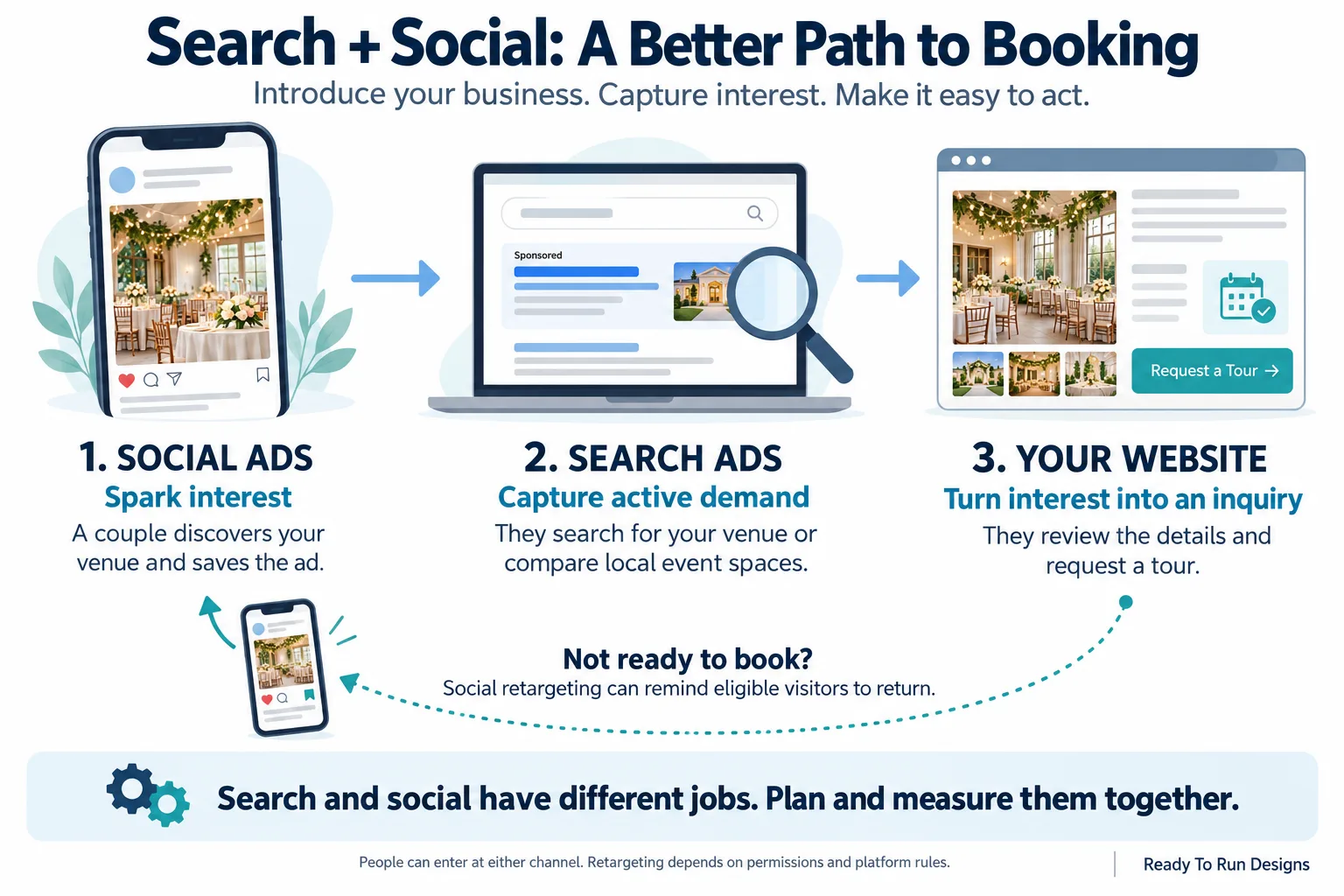
A couple sees your venue set up for a wedding reception in an Instagram ad and saves it. A week later, they search Google for your venue by name. A paid search ad takes them to your wedding page, where they review capacity and request a tour.
Social introduced the space. Search brought them back when they were ready to act.
Book a Free Ad Strategy Session With Ready To Run
Bring your current ads, budget, and the service or product you want to grow. Ready To Run can help you review where the money goes and plan your next test.
Book a free ad strategy session to get started.